

SHAKEELA ANDRABI
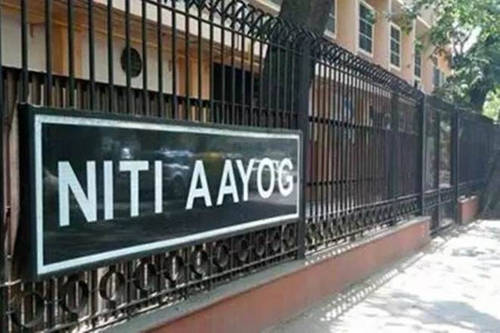
SRINAGAR: As per latest reports prepared by Government of India’s think-tank body – NITI Aayog, 12.58 per cent population in erstwhile State of J&K, which included newly created UT of Ladakh as well, is poor. The multi-dimensional poor index has taken into consideration various factors including per centage of population deprived of nutrition, maternal health and school education.
The report states that 25.9 per cent of population is deprived of nutritional food, 12.7 per cent of maternal health while 47.02 per cent don’t get proper sanitation facilities. The highest number of multi-dimensional poor have been reported in Ramban district with 35.26 per cent among all districts of J&K. Doda has 28.9 per cent multi-dimensional poor, Rajouri 27.5 per cent, Udhampur 26.83 per cent, Kishtwar 24.29 per cent, Poonch 24.27 per cent, Reasi 21.9 per cent, Kupwara 16.08 per cent, Kathua 13.08 per cent, Bandipora 11.07 per cent, Samba 9.67 per cent, Anantnag 8.36 per cent, Ganderbal 7.82 per cent, Kulgam 7.42 per cent, Baramulla 7.06 per cent, Jammu 6.97 per cent, Budgam 6.84 per cent, Shopian 6.51 per cent, Pulwama 3.79 per cent and Srinagar lowest at 1.51 per cent.
According to NITI Aayog’s Multi-dimensional Poverty Index (MPI) Bihar leads the chart having highest number of poor population at 51.91 per cent followed by Jharkhand (42.16 per cent) while Uttar Pradesh (36.65 per cent) is at the third spot. Kerala has emerged as the Best State with only 0.71 per cent poor people.
As it is well-known, at present more than 80 crore Indian population is purely dependent on Pradhan Mantri Gareeb Kalyan Yojna under which 800 million people are receiving free ration from last two years and recently the Government has extended the scheme upto March 2022.
In early 2020, the Cabinet Secretariat, Government of India, identified 29 global indicators for monitoring analysis and evaluation with goal of improving India’s position in global rankings. Under this mandate, also known as Global Index for Reforms and Growth (GIRG) mandate, NITI Aayog was identified as the nodal agency for calculating Multidimensional Poverty Index (MPI). India’s national MPI initiatives uses the globally recognized and robust mechanism developed by Oxford Poverty and Human Development Initiative (OPHI) and the United Nations Development Programme (UNDP), which have been key partners in ensuring the efficacy and technical tightening of the Indexes public policy.
“This baseline report of India’s first ever national MPI measure is based on the reference period of 2015-16 of National Family Health Survey (NFHS). The national MPI measure has been constructed by utilizing twelve key components which cover areas such as health and nutrition, education and standard of living,” Vice Chairman NITI Aayog, Dr Rajiv Kumar has said in a message.