
By Lalit Gupta
The cowardly massacre of innocent tourists at Pahalgam by Islamist terrorists on 22 April 2025, widely condemned by national and local leaders as well as the general public, 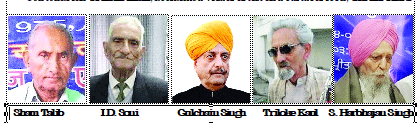 created an atmosphere of gloom that, among other things, overshadowed Jammu and Kashmir’s normally vibrant cultural life.
However, Operation Sindhoor-the country’s military response on 7 May 2025 to the horrific Pahalgam terror attack-marked Bharata’s shift from a reactive to a proactive approach, signalling a zero-tolerance policy towards cross-border terrorism. This decisive action was greatly welcomed by the people of J&K, the worst sufferers of more than three decades of militancy-induced socio-cultural and economic disruptions.
In its aftermath, a renewed sense of bonhomie and widespread domestic support led to  events such as Tiranga Rallies held across J&K to honour the armed forces. Alongside sustained efforts to revive tourism, the UT government undertook a concerted action plan to host art and craft exhibitions, folk performances, Shinj Melas, and the annual Tulip Festival in Srinagar and Sanasar to attract visitors and celebrate local traditions.
Under various Government of India schemes, the UT’s Department of Culture emerged as a pivotal agency in facilitating these initiatives, encouraging widespread community participation and cultural outreach. Consequently, in the post-Operation Sindhoor phase, Jammu and Kashmir’s cultural landscape witnessed a steady resurgence, symbolising a new era of stability, security, and the promise of sustained peace and prosperity
Departed: Before moving to an overview of the annual cultural scenario and the year’s notable achievers, we pay homage to the distinguished cultural personalities who sailed into the sunset.
 Centenarian Triloke Kaul, acclaimed visual artist and cultural icon, Sardar Harbhajan Sagar, prominent Punjabi and Urdu fiction writer, Chandan Negi, writer and former Radio Jammu professional, I.D. Soni, social worker, educator, and author, Ashok Jailkhani, Doordarshan and theatre personality remembered as a mentor and guide, Sham Talib , lifelong president of Adbi Kunj and literary mentor, championing Urdu, Dogri, and Punjabi, Gulchain Singh Charak, who initiated the landmark Ram Lila and Dussehra celebrations at Gandhi Nagar, Jammu, in the early 1970s.
Awards and Honours: The Padmashree award 2025 was conferred upon Prof. Lalit Kumar  Magotra, eminent Dogri writer, for his contributions to literature and education. Shri Mata Vaishno Devi University, Katra, awarded D.Litt. (Honoris Causa) to Prof. Shiv Nirmohi, Padamshree, for his lifelong dedication to documenting Dogri folklore, culture, and history.
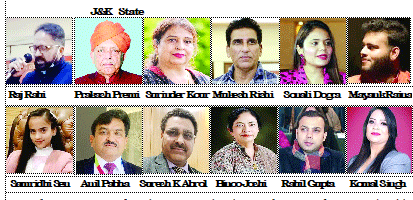
J&K State Awards 2025, were conferred upon; noted writers Raj Kumar Sharma (Raj Rahi), Prakash Chander Sharma (Prakash Premi) in Dogri; Kulbushan Mahotra -Hindi, Surinder Kour Neer -Punjabi Writer/Translator, and Mukesh Reshi-Actor, Sonali Dogra, Mayank Raina
and Samridhi Sen for music, Anil Paba, Archeologist, Suresh Kumar Abrol, Manuscripts Conservation, and Lifetime Achievements Award– Educationist Ishwar Das Soni.
Outstanding Media Persons awards were given to Binoo Joshi, Rahil Gupta, and Komal Singh Manhas.
Multifaceted artist Rajkumar Behrupia, RJ Juhie Mohan and Tawi Tales Podcast anchors Dr Vikas Padha and Prof Ajay Khajuria, were honoured by: Watch O Suno Dogri”, founded by Jagmohan Sharma.
Dept of Culture:

With mandate to advance unity in diversity through preservation of language, heritage, arts, and traditions, J&K Department of Culture, headed by Brij Mohan Sharma, JKAS, supervised major initiatives including ongoing phased restoration of number of heritage projects, revival of the restoration Mubarak Mandi complex, start of a calligraphy diploma, excavation of the Himalayas’ largest Buddhist site.
Jammu and Kashmir Academy of Art Culture and Languagues (JKAACL): The premier institution mandated to develop and promote modern practices of creative and folk arts, cultural practices, and languages, is huffing and puffing under its new responsibility as the cultural content provider for the flurry of national and local events. The in-charge bureaucrats’ only mission is to address the incessant demands from higher-ups, including the MLAs who request cultural programs to please local constituencies. With the result, JKAACL flagship programs like annual art exhibitions, drama festivals, classical music competitions, publication of dictionaries and encyclopedias, are put on the back burner.
 State Archives: Thanks to the initiatives under the Jammu Smart City Project and with K.K. Siddha as Director of the Department of Archives, Museums and Archaeology (DAMA), the State Archives, after decades of neglect and housed in dingy, moth-laden rooms, today stands located in Kala Kendra premises in a state-of-the-art building. Equipped with modern scientific facilities, it has emerged as an important resource of J&K historical records, some going back to the 18th century.
Dogra Art Museum: Dogra Art Museum, with Mukul Magotra as Curator and Dr Sangeeta Sharma as Assistant. Director, organised exhibitions on Basohli paintings, ancient texts, and coins during the 2025 heritage events. It celebrated World Heritage Week with visits for specially-abled and orphaned children and launched a 15-day summer internship,  training 150 undergraduate students in Museology. The Department of Archives, Archaeology and Museums, Jammu and Kashmir, organised its first-ever motorcycle rally to promote awareness about Jammu’s restored heritage sites. Conceptualised by Sunny Dua and flagged off by the Principal Secretary, Culture, Brij Mohan Sharma, from Kala Kendra, Jammu, the 35-kilometre rally culminated at the serene Bamuchak Temple. Representing their respective motorcycle clubs, the riders were led by Preety Chowdary and Sameer.
Film: Amit Dutta and wife Aishwaria continued their exceptional creative journey, earning international and national honours. His films received accolades: Jury’s Special Mention Prize for Stream-Story, Intangible Cultural Heritage Award, Cinéma du Réel (by the French Ministry of Culture); Phool ka Chhand (Rhythm of a Flower) nominated for Critics’ Choice Awards 2025; Rhythm of a Flower (a film on Kumar Gandharv) receives the Golden Gate at the Mumbai Academy of Moving Image (MAMI); The Many Interrupted Dreams of Mr. Hemmady received the Principal prize of the International Jury at the 70th International 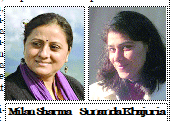 Short Film Festival Oberhausen, Germany; The New Yorker magazine lists Nainsukh among the best biopics ever made. He authored a Dogri poetry book, with English translation and illustrations by Ayswarya. Their film on the Nala-Damyanti paintings, with animation by Ayswarya, was screened in 2025 at the 13th Seoul Mediacity Biennale, Frieze Film Seoul. Short film-maker Ompal Singh Sambyal emerged as a sensitive chronicler of vanishing Dogra rituals like Bagni, Laadi and Jagarana, etc.
Theatre: Rangyug’s solo play Chanchalo by Juhi Mohan stood as a highlight of 2025. Her over 90-minute performance showcased Deepak Kumar’s directorial prowess and established her as a gifted actress who humanised domestic labour with dignity and emotional depth.
 Silver lining for Jammu theatre is the opening of the Department of Performing Arts in the Cluster University of Jammu. The team of teachers led by Kuldeep Raina and academically trained theatre talents like Abhishek Bharati and Aparna Kapoor is committed to providing the creative youth of J&K with proper theatre education and training and which is are going to enrich the cultural and educational space of J&K.
But on the ground, despite the regular performances by groups like Natrang, the overall theatre practice in Jammu has suffered a setback. Mainly due to the discontinuance of the Annual and District Theatre Festivals by J&K Academy of Art, Culture and Languages (JKAACL) under post-UT restructuring. This has taken out the competitive edge, which otherwise had been the motivating incentive for the local and muffasil amateur theatre 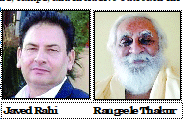 groups of actors/directors/playwrights/musicians to showcase their creative talents to the civil society and win public admiration and recognition.
Veteran critic Ravinder Kaul’s resumed theatre reviews in the Daily Excelsior after a hiatus of over two decades, providing critical engagement. As far as individual actors are concerned, the senior actors like Janak Khajuria, J.R Sagar, left their mark in productions: Ek Panna Gumnam (Navras), written by Rajnish Gupta’s on freedom fighter Shaheed Ashfaqullah Khan; Kumar A Bharti’s Galat Vayakaran under Mohit Chib’s direction, (Bhartiya Kala Sangam); and Shiv Mehta’s Dogri adaptation of Vijay Tendulkar’s Sakharam Binder, directed by Mohit Chib.
Ravinder Sharma performed Chitta Singh at Alwar Rangam Saptahak Rangdhara, translated and directed The Bacchae at Bharat Rang Mahotsav 2025, LTG Auditorium, New Delhi, directed Shriya Bhat, Amarnath Vaishnavi, and Angikaar at Jammu. He got the Best Director Award for Baba Jittmal at the Dogri Theatre Festival. He acted in Culster University, Dept. of Performing Arts maiden production Jasma. Rajneesh Kumar’s Yogic Ramayan was presented at the International Ramayan Conclave. He wrote and directed Ek Panna Gumnaam, staged at multiple venues. He presented Loh Purush – Vallabhbhai Patel, Dogri play Shah Sahni.
 Visual Arts: After years of stagnation, the Institutes of Music and Fine Arts (IMFA) is set to witness a revival following the intervention of Chief Secretary Atal Dullu, IAS. The visual art scene of Jammu in 2025 saw three landmark exhibitions, including major shows of J&K modern and contemporary
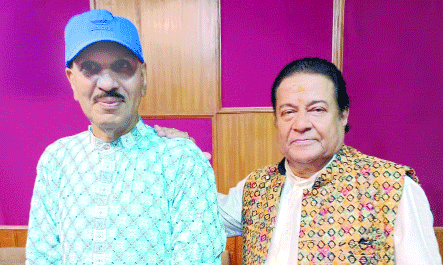
Brij Mohan Anup Jalota
artists at Kala Kendra as part of the 3rd Edition of Tawi Festival.
Notable solos were ‘Akshara’, by Subhash Razan, comprising of creative portrayal of Sharda’s script’s spiritual legacy and Milan Sharma’s ‘Memory Imprint’, a sensitive portrayal of memory and self. Her works were also included in a prestigious group show curated by Anita Dube: “Complexity of Democracy Part 2” at Art Heritage, New Delhi. She also participated in the “Colour for Peace Festival” in Germany. Neeraj Bakshi, presently seeking inspiration in Kenya, explores the deep cultural bond between humans and animals. Painthal born, Sunanda Rani Khajuria, presently teaching in China, participated in major international exhibitions and biennales across South Korea, Macedonia, China, India, and the USA, prominent group shows in New Delhi and Harvard University, and art fairs such as NADA Miami and the India Art Fair. She received an award for a solo project at IA&A at Hillyer, Washington, D.C.

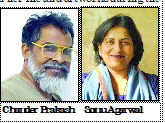
Rajinder Tikku, Padamshree, curated a prestigious exhibition of leading sculptors in Delhi. Udhampur-born sculptor Chander Prakash, whose works adorn the Kenyan airport, held group shows in Mumbai at Bikaner House. Conducted wood-carving workshop at Agra University, was a visiting professor at Parul University, wrote for Platform magazine, Mumbai. Sonu Agarwal, a leading female sculptor, had a solo show at the Faculty of Fine Arts, Baroda, held an interaction on her life and artworks during the National Workshop on Contemporary Sculpture, at Agra, and participated in the group show Mystique of Seven” at Jahangir Art Gallery. She, with her husband Chanderr Prakash, is? working in Studio 2929, Artist Village, Baroda. Sculptor, Sukhjeet Kukkal: participated in a group show by Art Connect Foundation at the India Habitat Centre, New Delhi. Veteran sculptor Ganesh Sharma participated in numerous exhibitions in New Delhi and other cities. He received “Atulya Bharat Kirti Samman, Rajasthan, 700 Award certificates and 900 International exhibitions participation Certificates virtually. Jang S. Verman participated in national art camps and exhibitions across India, completed ten years of a weekly art and culture column in a local daily, and received several honours. His short story collection Do Ghatt Teraan Kahaniyan was published in Hindi and Dogri translations. Manoj Chopra, cartoonist and painter, was honoured with the Cartoon Watch Lifetime Achievement Award 2025 at the Cartoon Festival, Raipur, Chhattisgarh. Chander Shekhar ‘Bunty’, the award-winning cartoonist of J&K, has started an insightful blog on social media. K K Gandhi, a
painter of mysticaly landspaces participated in number of group shows in the country and gave live demonstrations in number of instituions.
Kala Kendra, Jammu: With Javed Rahi as Secretary, despite nil financial support, Kala Kendra has strengthened its position as a leading visual arts venue in 2025 through 35 major programmes, exhibitions, camps, and inclusive outreach initiatives. Owing to the initiative of Brij Mohan Sharma, IFS, Kala Kendra is set for major infrastructure upgrades, including renovated galleries, air-conditioning, and improvements to the Sculpture Garden after 25 years. Classical Music & Dance: Under Sangeet Guru Vijay Kumar Sambyal-Rangeele Thakur, Bharatiya Sangeet Sansthan promoted classical and folk music through concerts and tributes. Nrityanjali Kathak Academy, led by Dr Priya Dutta, achieved national acclaim with Kathak performances, workshops, and large-scale productions like Vande Mataram.
Dogri Language & Literature: The erosion of mother tongues continues, but social media platforms have emerged as unexpected allies in Dogri preservation. Writers, scholars, and institutions released significant literary works, translations, plays, and research publications. Major contributions came from: Om Goswami wrote the monogram for Sahitya Akademi “Padma Sachdev Rachana Sanchayn”, edited Bal Krishan Chanchal’s poetry book “Kavitavali”. and autobiography “Chetain Diyaan Phuaraan”, Prakash Premi’s translated Bhartrhari ‘Shatak Tre’, Inderjeet Kesar’s latest novel’ Badlde Rang’, Sundarani’s Pandit Mohan Lal’s anthology of Kundaliyan Khidade Moti, Rajeshwar Singh Raju’s translation of book on legendary cultural icon Bhupen Hazarika, and plays: “Te Us Kan Band
Kari Le” and “Apne Uppar Bhari”, was awarded with the Gargi Gupt Translation Award by Bhartiya Anuvaad parishad, New Delhi, Yashpaul Nirmal’s books: ‘Mashal’-first ever poetry book in the Dogra Script, ‘Loee’-Drama, and ‘Nou Ratni Laghukathan’, Dr. Ashu Sharma’s ‘Bharti Sahitya te Sanskriti’ and Yashpaul Nirmal: Vyaktitav te Kritatav, Jyoti Sharma’s novel General Zorawar Singh. Jambunama by T.R. Magotra explores Duggar’s history, texts, governance, society, economy, personalities, and origins of Duggar and Dogri language and Shambhu Ram Pyasa’s travelogue ‘Sukhaa da Saah’.
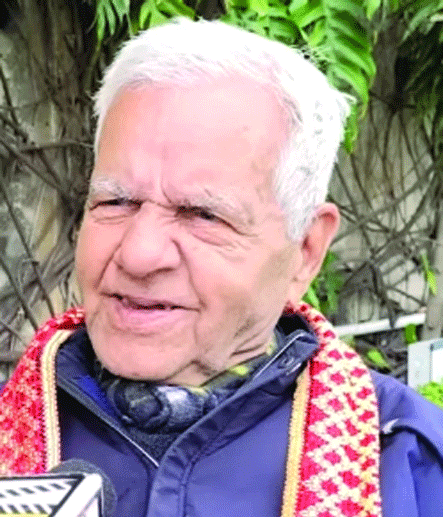
Narsingh Dev Jamwal, Padamshree, nonagenarian eminent writer, critically documented J&K’s history through his books in Dogri: “1947 da Pakistani Hamla te Brig. Rajinder Singh” and “Manno Ni Manno” – which includes his lecture on Prof. R. N. Shastri, delivered under Sahitya Akedemi’s “Mere Jharokhe Cha”-he corrects historical narratives and preserves intellectual discourse. He was honoured by JKACCL under the series “Meet the Eminent Personality” and Dogra Sadar Sabha on Dogri Manta Divas. Written, sung, and musically composed by Dr Nasib Singh Manhas, the Dogri Ramayan, presenting the complete Ramayana in 108 Dogri chaupai Mala,” is a landmark Dogri work of 2025. It is being widely heard in temples across Jammu, Himachal Pradesh, and Punjab. His poetic anthology Dard Pataari became the first Dogri book transliterated into Punjabi (Gurmukhi).
JKAACL Dogri Section, with Reeta Kharyal as Editor, organised interactions with ‘Meet the Eminent’ series with eminent literary figures and held book release functions, poetic symposia. Dogri Sanstha, Jammu, held 12 Kavi Gosthis, book releases, a Dogri book exhibition, and special lectures. Cultural outreach included the Dogri song “Jai Dogra” and screening of a documentary on Ved Rahi. Santha organised award ceremonies: Dinu Bhai Pant Memorial Award to Veteran Dogri litterateurs Veena Gupta, Prakash Premi by Shri Dinu Bhai Pant Memorial Trust. Bandhu Sharma Memorial Award to Prolific Dogri novelist, poet Inderjeet Keasr by the family of Shri Bandhu Sharma. Prof Ram Nath Shastri Memorial Award to Brij Mohan, for the book Manai de Aale. He composed music for songs by Mohan Singh and Yash Pal Yash, sung by Bollywood artists Anup Jalota, Kailash Kher, and Sadhna Sargam. His music compositions for the anthem Jai Dogra and the film Gallan Pyar Diyan earned him multiple awards and honours.
Sahitya Akademi: Mohan Singh, Padamshri, as Convener of Dogri Advisory Board of Sahitya Akademi, organised programs like Gramlok, literary forums, workshops, symposia, and national festival participation across Jammu, Delhi, Udaipur, and Patna, engaging 177 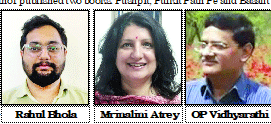 Dogri poets and writers and covering poetry, folk literature, translation, women’s writing, and language issues.
Meri Mitra Mandali -Ek Saahityik Kranti, the Udhampur-based literary NGO, organised 12 Mitra Sandhis, 24 sessions of Saptahaant Abhyaas, Mandaliyan series at Sumb village with 50 poets, and engaged around 800 children through Bholiyan Shaklaan Mitthe Bol. It released the 2nd edition of Mandali Patrika. Dogri Bhasha Academy, with president Roshan Lal Bral, organised an Internship/ Translation Workshop, Virat Kavi Sammelan in which 86 children participated. It released Rattan Bhardwaj’s book, and ‘Deedo Dogra’ translated by Dr Abhay Singh Bhadwal. Duggar Manch, released new Dogri books, held kavi darbars and celebrated Madhukar Day.
Nami Dogri Sanstha: With Capt. Lalit Sharma, IFS, as president, Anupama Sharma as Patron, Harish Kaila as office bearer, organised literary meets, eight book releases, poetry, music, and discussions, outreach events for the elderly, young talent, collaborated with cultural institutions, felicitated eminent personalities, and commemorated anniversaries of notable Dogri writers and artists.
JU PG Dept of Dogri’s assistant professor Padam Dev Singh participated in the Festival of Letters, held by Sahitya Akademi in New Delhi. Students ‘publications of poetic anthologies included Ajay Singh Slahtia Aithamian’s ‘Akkhrein Di Gannd Trupp’ and Nitish Dev Siman’s ‘Tatihari’. Subhash Brahmanu, the hinterland artist and his group, is doing a significant service to Duggar’s iconic folk music form of Bhaakh by performing it alongwith his students who are also being trained in the endangered traditional folk music form. Dogra cuisine has found exposure and preservation through food-vlogging sites featuring Shailesh Kabu, Shiva Vlogs, Burp n, Foodineer Ishita and Bless My Food by Payal. The Senior Citizen Support Club, led by Dr Kasturi Lal, is also contributing to preserving Dogri and Dogra culture.
HINDI: In 2025, Hindi poets of Jammu earned distinction for poetry reflecting complex contemporary realities. A strong critical voice was provided by Kamal Jeet Choudhary, noted Hindi poet, author, critic, and translator, whose work appeared widely in print and digital platforms. He translated Dogri poetry of Dhayan Singh, Mohan Singh into Hindi, contributed to anthologies, and saw his poems translated into Punjabi and Marathi. His monthly column ‘Paraans’ on pahleebarblogspot.com. carried critical commentaries on leading Jammu poets: Amita Mehta, Dr Vikas Dogra, Kumar Krishna Sharma, Aditi Sharma, Sudheer Mahajan, Deepak Kumar, Dr Shashvita, Maharaj Krishan Santoshi. Among the avant-garde voices of Jammu, the acclaimed poet Sanjeev Bhasin released his anthology “Bahut Picchae se Aaataa Prakash”. Hindi prose saw notable contributions, including Kshama Kaul’s fourth novel Bandhak and her Hindi translation of Avtar Mota’s Kashmir: The Crown Jewel of Indic Civilisation. She also received a Senior Fellowship from the Ministry of Culture. Agnishekhar published Kashmiri Lok Kathayen and wrote the first play on 17th-century Kashmiri poet Roop Bhawani. Prof. Raj Kumar published Deh Dharan Ka Dand, while Om Goswami authored Duggar Ka Kohinoor Vyakitatva: Pitamber Shastri and edited young prodigy Atharava Kartikaya’s “Jammu ki Lok Kathayein”. Anila Charak’s Bare Foot in the Sand of Life was released, and she received the Mahadevi Samman, Rashtriya Pratibha Samman, and a Lifetime Achievement Award. In history writing, T.R. Magotra’s Pariyon Ka Desh explored the Hindu roots of the Kalash people, while Prof. Bharat Bhushan Sharma’s Hindi translation of Kedar Nath Shastri’s Dogri Nibandhavalli broadened access to regional heritage. Hindi Sahitya Mandal (HSM) revived its publication series Tawi Ki Dhara, released issues of Madhurima and honoured Late Kavi Rattan with Ramesh Mehta Memorial Award, Sonali Thakur, topper of MA Hindi, 2024 batch of Jammu University, and Kathua-based Neena Andautra with HSM Navlekhan Tej Puraskar, hailing for her collection of short stories titled Bindloo. Events included the release of the Hindi edition of painter-writer Jang Verman’s short stories, titled Do Kam Terah Terah J&K Rashtra Bhasha Prachar Samiti and Yuva Hindi Lekhak Sangh organised seminars, goshtis, and competitions, sustaining literary engagement.
Urdu: The Department of Urdu, JU, organised a series of major academic, cultural, and literary events, including a manuscript exhibition, Meet the Author program with Prof. Khawaja Ekram-ud-Din (JNU) in collaboration with the Rasa Javedani Library Society, the Jammu Language Conference uniting 17 regional languages, and the release of Rasa Fahmi. Jatinder Udhampuri, Padamshree enriched Urdu literature with his anthologies of poetry ‘Dhoop Chhaon’, ‘Mein Tanhai Mein Sochata Hun’.
Punjabi: Eminent poet Swami Anterneerav participated in the National Youth Poetry Festival and the International Poetry Festival. Punjabi Section of JKAACL, with Popinder Singh as editor organised conferences, kavi darbars, and author interactions with prominent literary personalities, released books: Punjabi Sahit Di Usaari, Azadi De Aar-Paar by Kanwal Kashmiri, Himal Naagraay, Sehme Sammey Di Baat by Ajeet Singh Mastana, and Vidharthinama by Bhupinder Singh Raina. Jatinder Udhampuri, Padamshri, added to the Punjabi corpus his book on mystic poetry ‘Mele PattanaN De’. Khalid Hussain coordinated a symposium on the Punjabi poetry of the Gojri spiritual leader Main Abdullah Laarvi at Wangat Kangan. The well-attended event was presided over by Prof. Rawail Singh with MP Mian Altaf Ahmed as the Chief guest. Punjabi Lekhak Sabha, Jammu, conducted seminars on Sufi poetry, launched the quarterly magazine Asin, held a mushaira, honoured Antarjeet Kour with the Gurmukh Singh Raina Memorial Fiction Book Award, and released notable books, including Chhanivaar Ei and Sairan Bahrley Mulkan Diyan by Dr Monojit, Mitraan Naal Baharaan by Balwinder Singh, Aalochana De Ang Sang by R.S. Rajan, Meri Peed, Mera Birahara (translated from Rafiq Masoodi’s Panun Doad, Panen Dug), and Devinder Singh Vishavnagrik Di Sirjana, edited by Prof. (Dr.) Baljeet Kour.
Gojari Section of JKAACL organised a series of Gojri literary and cultural programmes across J&K. These included conferences, book releases (Manzoor-ul-Haq’s Gojri book ‘Adhritho Sach’), writers’ meets and district-level programmes in Doda, Reasi and Rajouri. Javed Rahi, Gojari, writer, poet, scholar, was honoured by the University of Jammu with a lifetime achievement award for tribal research. He represented Jammu and Kashmir at the National Tribal Languages Festival in New Delhi.
Kashmiri: In 2025, fewer Kashmiri books were released. Nagrad Adbi Sangam Jammu actively promoted the Kashmiri language through mushairas, literary discussions, and the release of Sountukpartav by the late Gangadhar Bhat, while focusing on reviving Nagrad magazine. Bhadarwahi and Sheena are set to receive a major boost with the appointment of dedicated editors for these languages in the JKAACL, strengthening their preservation and development.
English: Veteran writer and journalist O. P. Sharma’s English book “Doyens of Dogri Literature” has brought together for the first time all the 51 Sahitya Akademi Award recipients in Dogri since 1972. Rahul Pandita published his novel, Our Friends in Good Houses, a vulnerable and insightful exploration of the enduring search for home. Avtar Mota added two books: The Bright Stars of the Foggy Nights and Landscape & Lament: Art, Exile and the Rebel Artist, which have been catalogued by the Thomas J. Watson Library of the Metropolitan Museum of Art, New York. Dervish in the City of Merchants, a collection of love poems translated from Hindi, which features works by nine Indian contemporary poets, including Jammu’s poets such as Kamal Jeet Choudhary, late Manoj Sharma, and Krishan Kumar Sharma. Adding to the military history, Maj Gen. (Retd) Ranjan Mahajan’s ‘Kashmir in Line of Fire’ offers a candid, balanced, and deeply personal account of a nationally significant conflict. The Himalayan Heritage Foundation launched the fortnightly newspaper The Chancellor in June, edited by senior journalist Anuja Khushu. The paper focuses on socio-cultural issues, heritage, culture, tourism, art, Kashmir Shaiva Darshan, and national security.
Om Prakash Vidyarathi, exemplifying dedicated commitment to biodiversity awareness, completed 15 years of his innovative Tree Talk initiative with 1,672 public interactions. The Sahitya Akademi awarded author published two books: Pushpit, Pulkit Path Pe and Basant Geet Tawi Da.
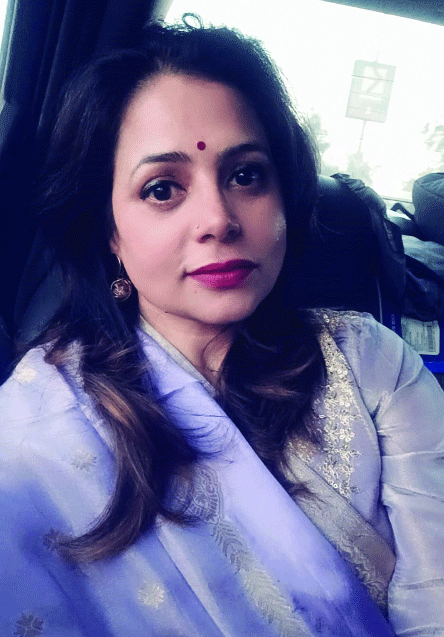
Conservation: Rahul Bhola, Jammu’s conservation architect, received a prestigious British Museum EMKP grant for his project on traditional construction systems of the Pir Panjal region. Dr Mrinalini Atrey significant contribution to heritage documentation and advocacy through her History Mehkama podcast is popularising regional history digitally. In 2025, she co-curated the Historic Cities Series-Jammu, showing Jammu’s heritage nationally. As Secretary-General of ICICH-ICOMOS, she represented ICOMOS International at UNESCO’s IGC.20COM, engaging in global discussions on living heritage, tourism, and climate change, while highlighting underrepresented cultural traditions in international heritage discourse.
INTACH: Under the convenor Shrishti Sahni, INTACH Jammu Chapter organised heritage walks, environmental and sanitation drives, educational competitions, workshops, and exhibitions, conservation awareness programs, plantation drives, heritage clubs in schools, cultural resource mapping, community outreach, official interactions, and documentation of heritage temples, strengthening public engagement in heritage preservation across Jammu.
The post Cultural Round –Up 2025 appeared first on Daily Excelsior.