

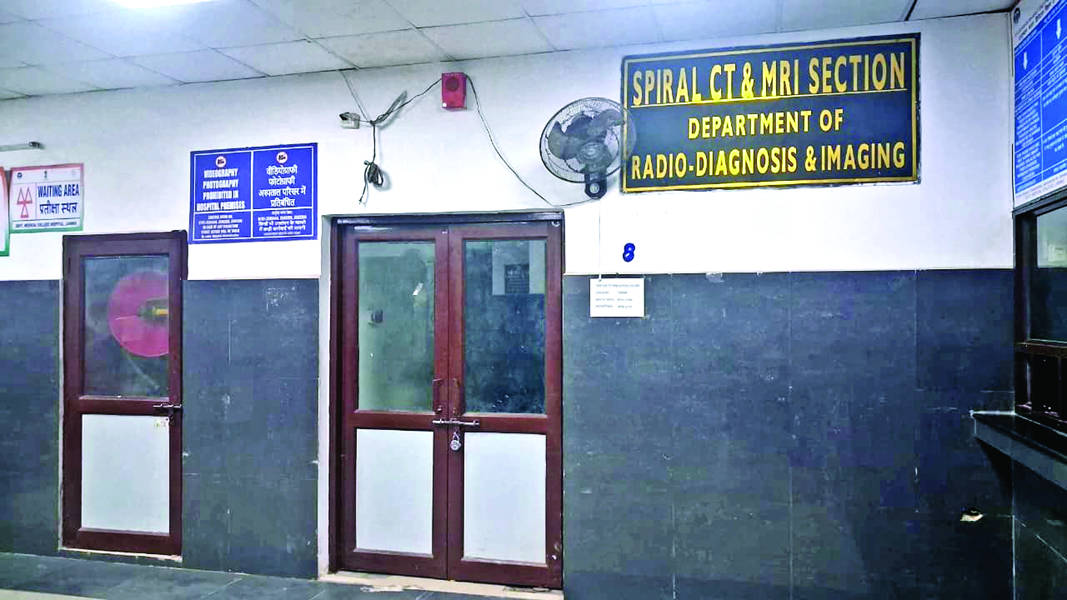
Diagnostic Breakdown in premier tertiary care institution
VIVEK SHARMA
JAMMU: Patients and their attendants at Government Medical College (GMC) Jammu are facing severe hardship as both MRI machines at the premier tertiary care institution have remained out of order for the past one month, leaving hundreds of patients without timely diagnostic support.
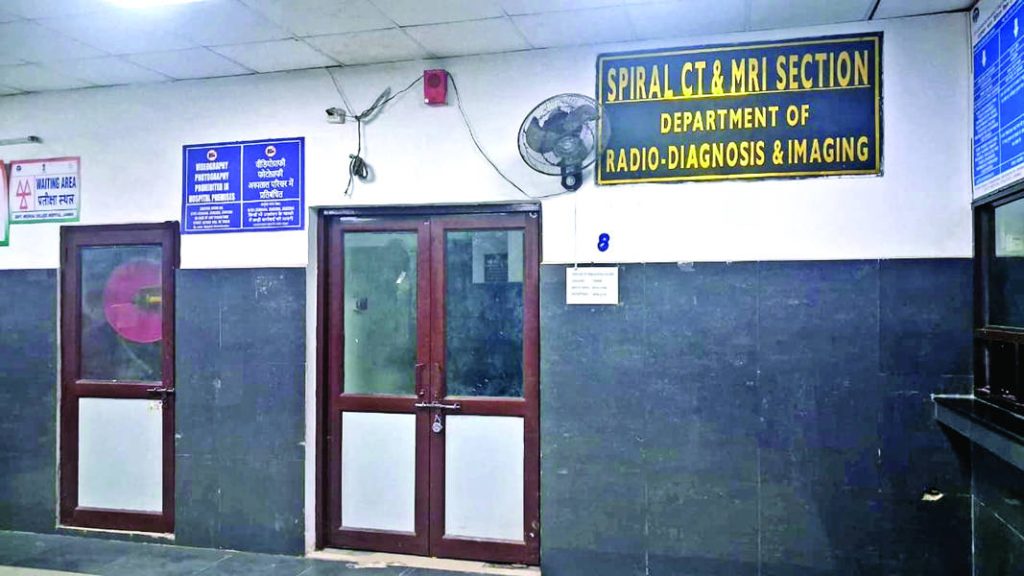
According to hospital sources, one MRI machine has completed its operational life and has effectively “expired”, while the second machine developed a major fault after an alleged improper modification in its earthling system. Sources said a slab was reportedly placed on the earthling system, leading to technical damage. Following this, the company concerned has declined to carry out repairs, citing violation of technical norms.
As a result, MRI services at GMC Jammu have come to a complete halt. On average, over 25 MRI tests were conducted daily at GMC, catering not only to patients from GMC Hospital but also from associated hospitals including Super Speciality Hospital (SSH), SMGS Hospital, and Bone & Joint Hospital. With the machines lying defunct, the burden has shifted entirely to private diagnostic centres.
The GMC administration has claimed that patients are being referred to outside centres where tests are to be conducted at rates prescribed by GMC. However, patients and attendants allege that in reality, dedicated centres such as Atulaya, Vivekananda, JK Health Centre and ASSCOM Sidhra rarely conduct MRI tests at GMC-approved rates.
At GMC, the cost of an MRI test is around Rs 2,500, with an additional Rs 1100 charged for medicines. Outside, patients are often forced to pay much higher amounts, making the test unaffordable for many, particularly poor and rural patients. Attendants complain of repeated visits, long waiting periods, and financial distress, with some patients delaying or altogether skipping critical investigations.
For the last one month, patients requiring urgent MRI scans-especially those suffering from neurological, orthopaedic and trauma-related conditions-have been the worst affected. “Doctors prescribe MRI, but there is no facility available here. We are sent outside and asked to manage on our own,” said an attendant at GMC.
Sources further revealed that the revenue generated from MRI tests at GMC was earlier utilized for hospital repair and maintenance works. With the machines non-functional, the hospital is not only facing revenue loss but patients are bearing the brunt of the administrative and technical lapses. Despite the gravity of the situation, there appears to be no immediate solution in sight, and no clear timeline has been given for restoration or replacement of the MRI machines.
The continued non-availability of MRI services at GMC Jammu has raised serious questions about planning, maintenance, and accountability in one of the region’s most important government healthcare institutions, with patients paying the price for systemic failures.