

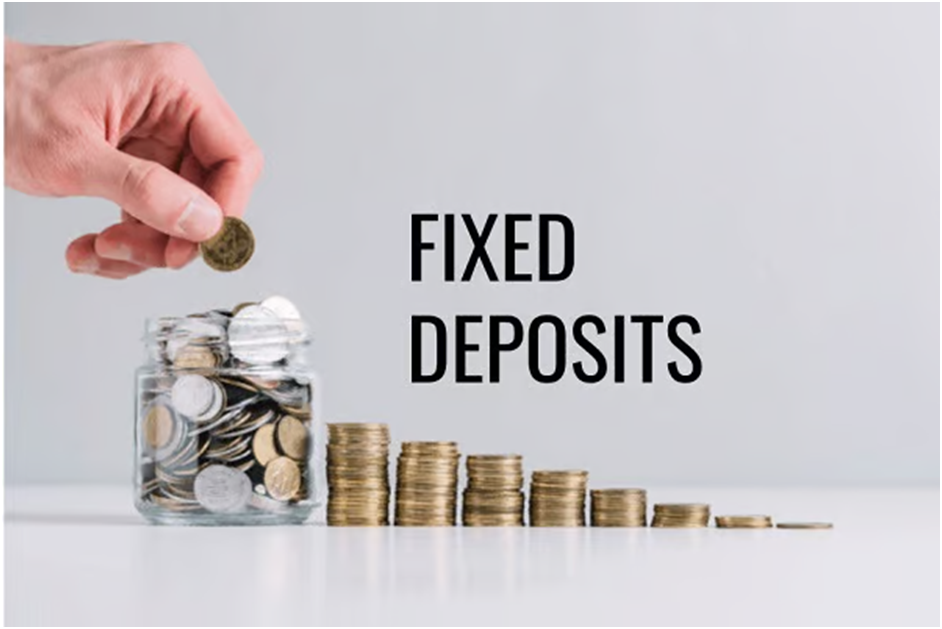
A fixed deposit remains one of the most trusted ways for several households to grow their savings without added market risk. You put a lump sum away for a chosen tenure, and the bank, post office or NBFC pays you a pre-agreed return. The biggest decision point is the fixed deposit interest rate because it decides how much your money compounds or pays out as income. When selected with the right tenure, issuer and payout option, a fixed deposit can support emergency planning, short term goals, and steady long term wealth creation.
What a fixed deposit is and why it suits Indian savers
A fixed deposit is a time deposit where you invest a sum for a fixed tenure at a declared return. Your return is known in advance, which makes this simpler than market-linked products. At maturity, you receive the principal plus interest, or you can take periodic interest payouts if you choose that option.
A fixed deposit can be opened with scheduled commercial banks, small finance banks, cooperative banks, the post office and some NBFCs and companies. Bank FDs also come with deposit insurance under DICGC of upto Rs. 5 lakh per depositor per bank. This protection adds to the safety angle, though it does not remove the need to choose a reliable institution. For non-bank issuers, safety depends more on credit quality and the issuer’s financial strength.
Key factors that decide your fixed deposit interest rate
The fixed deposit interest rate is not random and knowing what drives it helps you choose better. Rates move with the interest-rate cycle, the institution’s funding needs and the tenure you pick. Small differences in the fixed deposit interest rate can create a meaningful gap in maturity value over time. That is why when you compare the fixed deposit interest rate across issuers and tenures it is worth the effort.
RBI policy cycle and liquidity in the system
Banks take cues from the RBI’s policy stance and overall liquidity. When policy rates are higher, banks generally increase deposit rates to attract funds, and the fixed deposit interest rate tends to rise. When policy rates soften, banks may reduce deposit rates and the fixed deposit interest rate can come down for new bookings. Your booked FD rate stays locked for the tenure, which is a key benefit of a fixed deposit.
Inflation also matters in practical terms. If inflation stays higher than your post-tax return, the real value of your money grows slowly. So, while the fixed deposit interest rate may look attractive, you should consider the post-tax, post-inflation return for goal planning.
Tenure selection and payout choice
Tenure is a direct driver of the fixed deposit interest rate. In many rate environments, mid-tenures may provide better rates than very short or very long tenures, though this varies by issuer. Cumulative FDs (interest reinvested) and non-cumulative FDs (regular payouts) can also carry slightly different pricing in some banks. The fixed deposit interest rate displayed may be for a specific payout mode, so check the fine print.
If you need monthly income, you might select a non-cumulative fixed deposit and take interest payouts. If your goal is to maximise maturity value, a cumulative fixed deposit usually compounds and builds a bigger corpus. Both choices are valid, as long as the fixed deposit interest rate and the payout method match your requirement.
Issuer profile and risk perception
A bank’s cost of funds, brand strength, and balance sheet profile influence the fixed deposit interest rate it offers. Small finance banks may quote a higher fixed deposit interest rate to grow deposits, while large banks may come with slightly lower rates due to stronger low cost deposit franchises. Deposit insurance up to Rs. 5 lakh still applies to banks covered as per the DICGC including small finance banks, but you should still spread large sums across banks if required.
For NBFC and corporate deposits, the fixed deposit interest rate is usually higher than banks. That higher fixed deposit interest rate is compensation for higher credit risk and lower liquidity options. If you consider these products, focus on the issuer’s credit rating, track record and ability to service obligations through cycles.
Cumulative vs non cumulative fixed deposit
A cumulative fixed deposit reinvests interest, so your interest earns interest. This makes the maturity value higher than a payout structure, assuming the same fixed deposit interest rate and tenure. It is suitable for goals like a child’s education fund, a down payment or a planned purchase.
A non-cumulative fixed deposit pays interest monthly, quarterly, half yearly or yearly. It is suitable for household income support, especially if you want predictable cashflow. The quoted fixed deposit interest rate may be annual, but the payout depends on the institution’s schedule and calculation method.
Smart ways to build wealth with a fixed deposit
A fixed deposit becomes more effective when you use strategy instead of booking a single large FD. This is where simple structures like laddering and reinvestment planning help. These methods do not make the fixed deposit risky, they improve control. With the right structure, you can manage liquidity while still earning a competitive fixed deposit interest rate.
Use fixed deposit laddering for flexibility
Fixed deposit laddering means splitting your total amount into multiple FDs with staggered maturities. For example, instead of putting Rs. 5 lakh in one fixed deposit, you can place five FDs of Rs. 1 lakh each across 1, 2, 3, 4, and 5 years. As each fixed deposit matures, you can use the money or reinvest at the prevailing fixed deposit interest rate. This reduces reinvestment risk and the need for premature withdrawals.
Laddering also supports goal planning. A near term fixed deposit can fund planned expenses, while longer FDs continue compounding. You still get the stability of a fixed deposit, but with better access to funds. It is a practical solution for families managing multiple financial priorities.
Plan reinvestment to handle rate cycles
If you expect rates to rise, you may prefer shorter tenures so you can reinvest sooner at a better fixed deposit interest rate. If you expect rates to fall, locking part of your money for longer can preserve today’s higher fixed deposit interest rate. Since rate forecasts are never perfect, a balanced spread of tenures is sensible. This keeps your fixed deposit plan resilient across rate changes.
You can also reinvest maturity proceeds into a new fixed deposit instead of keeping money idle in a savings account. Savings rates are usually lower than a competitive fixed deposit interest rate. Over time, this small behaviour change can add meaningfully to wealth creation.
Use a fixed deposit as a liquidity tool
A fixed deposit can be used as a backup liquidity source. Many banks allow loans or overdrafts against a fixed deposit, usually up to a large percentage of the deposit value. Interest on such credit is usually higher than the fixed deposit interest rate, but it can still be cheaper than unsecured borrowing. This facility helps you avoid premature breaking of a fixed deposit during short term cash needs.
Some banks also ensure sweep-in or auto sweep facilities linked to a savings account. Surplus funds are moved into a fixed deposit automatically and can be broken in parts when needed. This structure brings together liquidity with the benefit of a better fixed deposit interest rate than a plain savings balance.
Conclusion
A fixed deposit is a simple, useful tool for investors who want stability, clear timelines and low stress in their financial plan. The right fixed deposit interest rate matters, but so do tenure choice, payout mode, liquidity needs and tax impact. Use laddering, diversify across banks when amounts are large, and align each fixed deposit with a specific goal. When you treat the fixed deposit as a planned component rather than a parked balance, a competitive fixed deposit interest rate can support safe and steady wealth creation over time.