

STATE TIMES NEWS
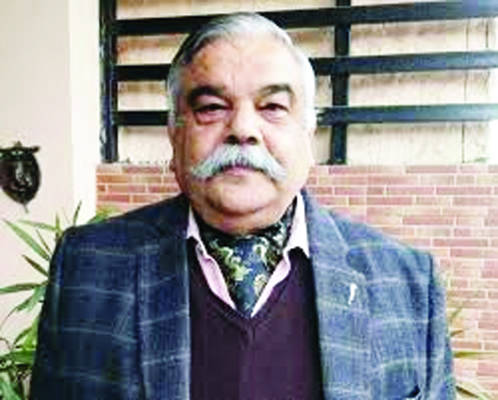
JAMMU: The US Counter Terrorism Chief has resigned terming the ongoing war against Iran as “Unethical War.” He possibly was unhappy with the selection of certaintargets which did not pass the test of moral evaluation. Also he stated that Iran does not pose an imminent threat to the US and the war was started under pressure from Israel and its powerful American supporters, rather than on clear national interests. But there is another school of thought that asserts that there are no ethics in war and the wars are fought to further national objectives, the theory in which President Trump believes. Possibly, Joe Kent is not in sync with the ultimate objectives of the war as perceived by Trump who has been very vocal about America being the only Super Power to whose tunes rest of the world should dance. It is therefore essential to understand the real intent of the United States and analyse the real objective of the War, believes Brig Anil Gupta (retd), security and strategic affairs analyst.
“Let us be realist – what is unfolding around Iran is not just about security, nuclear threats, or regional stability. The deeper reality is far more strategic. At its core, this is about power, and power in this region has always meant one thing: control over resources,” asserted Brig Gupta.
Under President Trump, the U.S. approach towards Iran has been framed as a fight against nuclear ambitions. But under the surface of this explanation lies a much bigger strategic goal. Iran sits at the heart of one of the most resource-rich regions on Earth, surrounded by vast oil reserves and critical maritime routes like the Strait of Hormuz-a chokepoint through which a huge share of the world’s oil supply flows. Control over this region doesn’t just mean influencing Iran-it means influencing the global economy itself.
Trump’s “maximum pressure” strategy, sanctions, and military posturing can be seen as steps towards weakening Iran’s ability to independently control its own resources, while simultaneously strengthening U.S. leverage over the entire Middle East and West Asia. “When you dominate the flow of oil, you hold a grip on global markets, energy prices, and ultimately political power across continents,” highlighted Brig Gupta.
“And it may not stop at oil. In a region where water scarcity is becoming one of the defining crises of the 21st century, long-term strategic control over water resources could become just as critical. Influence over rivers, infrastructure, and regional stability can shape the future of entire nations, further reiterated Brig Gupta.
The objective is clear. It is a calculated effort to position the United States at the centre of resource control in one of the most geopolitically vital regions in the world.
“Whether one agrees or not, this interpretation forces us to confront a larger possibility: that behind the rhetoric of security lies a far more consequential struggle-one for dominance over oil, water, and the future balance of global power,” summed up the Analyst.