

Dr Vikas Sharma & Proloy Sankar
There are more people dying of malaria than any specific cancer. The six countries of the greater Mekong sub region, including Cambodia, China, Lao People’s Democratic Republic, Myanmar, Thailand and Vietnam have witnessed success in eliminating the disease, reporting a 97 per cent reduction in malaria from 2000 to 2020. Our planet is an amazing place to thrive as it gives us everything we require to sustain our lives, but the alarming rise in the population amidst contaminated environment, have instigated various diseases to crop up and demolish the quality of living. Statistics reveal that a heavy toll of the world population, are suffering from various deadly diseases in the unabridged planet. A famous quote cited anonymously by a learned man, ‘If Health is Lost, Everything is Lost’. Copious diseases in our planet have plummeted our level of living which encompasses both mental and social well being. Moreover, focusing on the commercial and economical segment it has proved to be detrimental to the world economy too. The impoverished world, have faced various episodes of deadly disease pandemics which have greatly decreased the quality of living. The ongoing pandemic, the humanity is facing, COVID-19 has incited various health workers and researchers to formulate various avenues to nurture the quality of life. Moreover various organizations have also evolved to sustain humanity for a good cause. Various organizations like the World Health Organization (WHO) have already come up with various initiatives to make the world, disease free by raising awareness among peers. While the world is battling against the noxious virus of COVID-19, the population should not forget about other diseases which, a large toll of population have succumbed, malaria being one of the candidates.
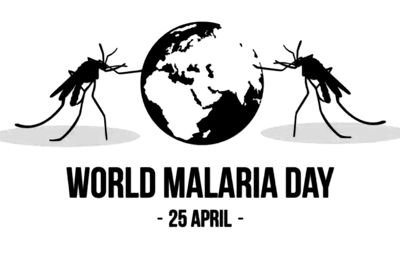
World Malaria Day is an annual observance held on April 25 each year under the umbrella of the WHO. It was first celebrated on 2008, budding from Africa Malaria Day. The noble observance served to assess progress framed to achieve goals of controlling malaria induced mortality. In 2007, at the 60th session of the World Health Assembly, it was proposed that Africa Malaria Day be rechristened as World Malaria Day to recognize the existence of malaria in the globe and to bring greater awareness to the global fight against the disease. On this day, a myriad spectrum of businesses, individuals and organizations across the globe join hands to strive toward a common goal: eliminating this illness. The idea behind the annual observance is to bring global attention to the efforts being made to bring an end to malaria and encourage action to reduce suffering and death from the disease. Every year the marshal organization, the WHO comes up with a new theme to raise awareness among the population relating to its cure and eradication. This year in 2022, the World Malaria day will be marked under the theme ‘Harness innovation to reduce the malaria disease burden and save lives’. The main motive under the theme encompasses to underscore the collective energy and commitment of the global malaria community in uniting under the common goal of a world free of malaria. Unfortunately, no single tool is available to solve the problem of malaria, so new tools are vital resulting out of rigorous innovations to materialize the global elimination targets. Awareness about these tools are vital and this year’s theme is framed to intellect the globe in a broad way to resilient the growing threat. The various tools to be discussed include innovations in new vector control interventions, judicial use of insecticides, improved diagnostics and more effective diagnostics. The critical role of this year’s theme is to draw the role what innovation plays in helping to achieve the global elimination goals. The auspicious eve has witnessed several success stories since its inception. Since 2000, malaria cases in the Western Pacific region have been plummeted by 39 per cent from 2.8 million to 1.7 million cases. The six countries of the greater Mekong sub region, including Cambodia, China, Lao People’s Democratic Republic, Myanmar, Thailand and Vietnam have witnessed success in eliminating the disease, reporting a 97 per cent reduction in malaria from 2000 to 2020. Since 2017, China has reported zero indigenous malaria cases and has been certified by WHO in 2021 as malaria free. In 2020, the Republic of Korea and Vanuatu reported fewer than 1000 malaria cases. Successfully, Cambodia, the Lao People’ Democratic Republic, Malaysia, the Republic of Korea and Vietnam all reported zero indigenous cases and fatalities in 2020. Statistics reveal that since its inception, the World Malaria Day have witnessed success stories and have hopefully succeeded to achieve its sole goal of awaking the population of the causes of malaria and it’s elimination. This year the WHO has come up with the call of action which encompasses
4Step up innovation in the fight against malaria
4Expand access to the tools we have now
4Expand the use of the first malaria vaccine
4Strengthen country ownership
4Ensure resilient and equitable health systems
4Improve surveillance systems
Plasmodium, a parasite is the villain for this deadly disease which is transmitted by the vector female Anopheles mosquitoes via bites. The parasite Plasmodium falciparum is the most widespread cause of fatalities all over the world due to malaria. Malaria is a highly contagious disease and often fatal. Symptoms of the disease include fever, headache and chilly sensations. However it is a preventable and treatable disease, but it continues to have a devastating impact on the health and livelihood of people around the world. According to survey statistics, in 2020, there were an estimated 241 million new cases of malaria and 6,27,000 malaria related deaths in 85 countries. More than two thirds of deaths were among children under the age of 5 living in the WHO African region. A myriad of countries have already being working towards it. Between 2000 and 2014 the number of malaria related fatalities fell by 40 per cent worldwide and the world has made historic progress against the disease by saving millions of lives. The global statistics reveal that more than 6,27,000 people have succumbed to malaria, large part shared by Africa. It being a common deadly disease, the World Health Organization has evolved with an idea to raise awareness among population by commemorating a day with the designation, “The World Malaria Day”. A famous quote cited by the billionaire Bill Gates, “There Are More People Dying of Malaria Than any Specific Cancer”. Incepted in 2007, the World Health Organization has declared malaria as a worldwide health emergency. The sole goal is to raise awareness and informing the population about malaria.
In conclusion, it can be said that the day is marked with activities organized by malaria affected populations, government organizations to raise awareness regarding malaria and the preventive measures and is surely a noble approach and initiative by the WHO to eradicate the deadly disease. Together by joining hands we can surely make a difference.
(The authors are from the Division of Biochemistry, SKUAST-Jammu).