
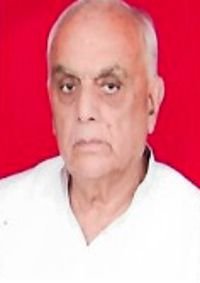
Er P L Khushu
Unlike Hinduism, the word ‘Hindutva’ didn’t come into popular discourse until 1923. It was coined by V D Savarkar in his text. For him, ‘Hindutva’ wasn’t the same as Hinduism. It had nothing to do with the practices and beliefs of the religion, but was only concerned with the political domination of various forces linked to pseudo secularism and the like. Given this, it can be said that Hinduism and Hindutva are not the same, but they aren’t contradictory either. Hindutva is an ideology of national political aim in terms of being a true Indian, committed to the cause of India as a true Indian. It means Indian-ness . It is not always necessary that to achieve this goal, the best tool is to practice the religion of Hinduism. No not at all. All the religions of India have to maintain a balance of tolerance in practicing the individual religions without malice and fanaticism. It will lead us to see the country as one India, without disruptions from so called political ideological differences. That is the concept of Hindutva. The so called political ideological manifestoes and charters of various political parties are nothing but gateways to black mail the Indian voter and mislead and exploit him for political power. This is definitely what has disturbed India so for. The secular concept of governance is a well drafted and crafted dogmatic myth, as it has been seen and observed that secularism and its pranks have divided the Indian society much more than by any other divide of religious fundamentalism, be it of any religion. It is a well invented and a well devised word used by so called secular political stalwarts ever since independence of our country, to sit in power as dynastic rulers, exploiting the people of India, on the identity card of religion, cast, color and above all the regional bias. It is quite unfortunate. The replicas are ‘Jammu & Kashmir’ and now West Bengal. Many more unfortunate instances can be quoted. Punjab Khalistan Movement, recent Shaheen Bagh turmoil in Delhi etc.
The man largely credited with the invention of the concept of Hindutva is Vinayak Damodar Savarkar (1883-1966), whose book; Essentials of Hindutva (Bombay: Veer Savarkar Prakashan, 1st edition 1923) laid out the concept in 1923. Republished in 1928 as ‘Hindutva: Who Is a Hindu?’ it is in many ways the foundational text of the Hindu nationalist creed. Savarkar chose the term ‘Hindutva’ to describe the ‘quality of being a Hindu’ in ethnic, cultural and political terms. He argued that a Hindu is one who considers India to be his motherland (Matrbhumi), the land of his ancestors (Pitrbhumi), and his holy land (Punya Bhumi). India is the land of the Hindus since their ethnicity is Indian and since the Hindu faith originated in India. Thus, a Hindu is someone, who regards India, this land of Bharatvarsha, from the Indus to the Seas’-as his motherland as well as his holy land, ‘that is the cradle-land of his religion.’ In keeping with the race doctrines of the times, Savarkar conceived Hindutva as an indefinable quality inherent in the Hindu ‘race’, which could not be identified directly with the specific tenets of Hinduism. Hindutva, he declared, ‘is so varied and so rich, so powerful and so subtle, so elusive and yet so vivid that it defied such definition’. But of course, the concept of Hindutva would have made no sense unless it was explained in relation to the religion of Hinduism. So Savarkar asserted: ‘Hinduism is only a derivative, a fraction, a part of Hindutva’. To him, the religion was therefore a subset of the political idea, rather than synonymous with it-something many of its proponents today would be surprised to hear. Savarkar, however, argued that: ‘Failure to distinguish between Hindutva and Hinduism has given rise to much misunderstanding and mutual suspicion between some of those sister communities that have inherited this inestimable and common treasure of our Hindu civilization. It is enough to point out that Hindutva is not identical with what is vaguely indicated by the term Hinduism. By an ‘ism’ it is generally meant a theory or a code more or less based on spiritual or religious dogma or system. But when we attempt to investigate into the essential significance of Hindutva, we do not primarily-and certainly not mainly-concern ourselves with any particular theocratic or religious dogma or creed. ‘Hindus, thus defined, constituted the Indian nation-a nation that had existed since antiquity, since Savarkar was explicitly rejecting the British view that India was just, in Churchill’s notorious phrase, ‘a geographical expression. No more a single country than the Equator.’ Savarkar’s vision of Hindutva saw it as the animating principle of a ‘Hindu Rashtra’ (Hindu Nation) that extended across the entire Indian subcontinent, and was rooted in an undivided India (‘Akhand Bharat’) corresponding to the territorial aspirations of ancient dynasties like the Mauryas (320 BC-180 BC), who under Chandragupta and Ashoka had managed to knit most of the subcontinent under their territorial control.
In the words of a later RSS publication, Sri Guru, the Man and his Mission, ‘It became evident that Hindus were the nation in Bharat and that Hindutva was their Rashtriyatva (Nationalism). For Savarkar, Hinduness was synonymous with Indian-ness , if properly understood. Savarkar’s idea of Hindutva was so expansive that it covered everything that a scholar today would call ‘Indic’: ‘Hindutva is not a word but a history. Not only the spiritual or religious history of our people as at times it is mistaken to be by being confounded with the other cognate term Hinduism, but a history in full. Hindutva embraces all the departments of thought and activity of the whole being of our Hindu race.
The definition and the use of Hindutva and its relationship with Hinduism has been a part of several court cases in India. In 1966, the Chief Justice Gajendragadkar wrote for the Supreme Court of India in Yagnapurushdasji (AIR 1966 SC 1127), that ‘Hinduism is impossible to define’. The Court judged that Hinduism historically has had an ‘inclusive nature’ and it may ‘broadly be described as a way of life and nothing more’. The 1966 decision has influenced how the term Hindutva has been understood in later cases, in particular the seven decisions of the Supreme Court in the 1990s that are now called the ‘Hindutva judgments’. Justice Verma had concluded in 1995 that ‘no precise meaning can be ascribed to the terms Hindu',Hindutva’ and `Hinduism’; and no meaning in the abstract can confine it to the narrow limits of religion alone, excluding the content of Indian culture and heritage’. Classifying Hindutva as a way of life of the people in the sub- continent, he dismissed the idea of equating the abstract terms Hindutva or Hinduism with the ‘narrow fundamentalist Hindu religious bigotry’. According to Ram Jethmalani, an imminent Indian lawyer and a former president of its Supreme Court Bar Association, the Supreme Court of India in 1995 ruled that ‘Ordinarily, Hindutva is understood as a way of life or a state of mind and is not to be equated with or understood as religious Hindu fundamentalism. It is a fallacy and an error of law to proceed on the assumption, that the use of words Hindutva or Hinduism per se depicts an attitude hostile to all persons practicing any religion other than the Hindu religion. It may well be that these words are used in a speech to promote secularism or to emphasize the way of life of the Indian people and the Indian culture or ethos, or to criticize the policy of any political party as discriminatory or intolerant. According to Jethmalani, the Supreme Court has properly explained the ‘true meaning’ of the term, and ‘Hindutva is not hostility to any organized religion nor does it proclaim its superiority of any religion to another’. According to him, it is unfortunate that ‘the communal propaganda machinery relentlessly disseminates ‘Hindutva’ as a communal word, something that has also become embedded in the minds and language of opinion leaders, including politicians, media, civil society and the intelligentsia’. Bhagwat claimed recently that the word Hindutva was applicable to the 1.3 billion people of India as the word expressed identity, continuity of spirituality-based traditions and the entire wealth of value system in the land of Bharat. ‘When Sangh says Hindusthan is Hindu Rashtra, it does not have any political or power-centered concept in its mind. Hindutva is the essence of this Rashtra’s ‘swa’ (selfhood). We are plainly acknowledging the selfhood of the country as Hindu,’ said Bhagwat. He added that the Hindu culture has expressed itself in diverse forms, ‘But, some groups are trying to spread hatred in society by creating insecurity among them, stating that diversity will be finished if they identify themselves as Hindu,’ he said. ‘The ‘swa’ or ‘self’ in ‘swadeshi’ refers to the same Hindutva. That spirit or ‘swa’ should be the compass directing our intellectual brainstorming and plans of action,’ he said.
Senior Congress leader Salman Khurshid sparked a controversy by comparing a ‘robust version’ of Hindutva to the jihadist Islam of terror groups such as the ISIS and Boko Haram, in his book prompting the BJP to accuse the Congress of weaving a ‘web like a spider against Hindus’. This is quite unfortunate for such a learned person to speak and pronounce so. May be he did so because of the compulsions of the U.P elections, as congress is now in quandary and in turmoil for getting votes, thus turning to the polarization and communalization of the electorate. Khurshid’s remarks also came in for criticism from within the Congress party with senior leader Ghulam Nabi Azad dismissing as ‘factually wrong and an exaggeration’ Khurshid’s comparison. This is the beauty of Indian democracy and the philosophy of Indiannes (Hindutva).
A passing reference, though quite insignificant in its weight and volume, needs to be made on this issue about the PDP leadership of Jammu & Kashmir too. Former Chief Minister and president of People’s Democratic Party (PDP) has reportedly said that ‘Sanatan Dharm doesn’t teach communalism. RSS & BJP have hijacked Hindutva & Hinduism in the name of their parties. Can she reply why she went for an alliance with BJP for forming a government in Jammu and Kashmir earlier and head that government as its Chief Minister. Had she accepted the membership of RSS for remaining in power? Does she need to be reminded of her praises which she showered upon Modi then as the prime Minister of India at various public gatherings? She is on record to have said that PM Modi is ‘the man of guts’ and the state needs him. How long to befool the political situations in Jammu and Kashmir. People fully know about all such sad and petty rumblings and fallacies. It needs to be concluded here that ‘Hindutva’ refers to ‘Indian-ness’ and not to Hinduism in particular.
(The author is a Chartered Consultant Civil Engineer, passionately attached and devoted to his Motherland – Jammu & Kashmir).