
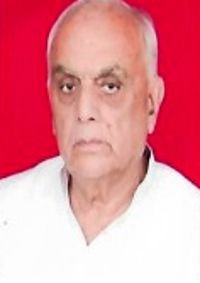
Er P L Khushu
Prime Minister Narendra Modi announced that the government has decided to repeal three farm laws, which were at the centre of protests by farmers for the past year, and appealed to the protesting farmers to return home. Prime Minister Narendra Modi said his government did its best to educate and inform the farmers about the laws and will continue to keep working for their betterment. While apologizing to the nation, I want to say with a sincere and pure heart that may be something was lacking in our Tapasya (dedication) that we could not explain the truth, as clear as the light of the ‘Diya’, to some of our farmer brothers. But today is Prakash Purav (Guru Purab), not the time to blame anyone. Today, I want to tell the country that we have decided to repeal the three farm laws,” Prime Minister Narendra Modi said in an address to the nation. Before the big climb-down, the Prime Minister defended the laws saying they were meant as reforms, mainly for small and marginal farmers in the country. “We regret we could not convince all farmers. Only a section of them was opposing the laws, but we kept trying to educate and inform them,” Prime Minister Narendra Modi said. “Whatever I did was for farmers. What I am doing now is for the country. In the Parliament session starting the end of this month, we will complete the process of repealing the three laws,” he said. “I would request all my protesting farmer friends, today is the auspicious day of Guru Purab, return home to your fields and your families and make a new beginning, let us move forward afresh,” he added. Prime Minister has given a Guru Purab gift to the protesting farmers of Punjab. In any case these Farm laws were already on the back burner and Supreme Court was also seized of the matter. A staunch supporter of the agricultural reforms and the three farm laws, noted agriculture economist Vijay Sardana, said that the three farm laws were excellent but some selfish people created such a political environment that government came under pressure. “Farmers have gained nothing from the repeal of farm laws. Anyway, status quo has been maintained. They gained nothing but lost so many things,” he said. Asked if content of the fresh farm laws would be same as the previous ones, Sardana responded in affirmation saying, “That would be the logical thing to do. He said that the laws were brought to improve the economic conditions of the farmers and unshackle them from the grip of middlemen and agents. “But a section of the farmers resorted to violence and aggression and worked against the interest of majority of farmers,” Sardana said. Modi said that the three laws were brought in the interest of farmers especially small and marginal farmers. “But despite our best of the efforts we could not make this sacred thing, completely pure and the one in the interest of them we could not convince a section of farmers. Agriculture economists, scientists and progressive farmers also tried their best to make them understand but to no avail,” Prime Minister Narendra Modi said.
The three farm laws which would be scrapped are Farmers’ Produce Trade and Commerce (Promotion and Facilitation) Act, Farmers (Empowerment and Protection) Agreement of Price Assurance and Farm Services Act and Essential Commodities (Amendment) Act. While Farmers’ Produce Trade and Commerce (Promotion and Facilitation) Act gives farmers’ freedom of choice for selling their produce across the country, Farmers (Empowerment and Protection) Agreement of Price Assurance and Farm Services Act provides framework for contract farming. Essential Commodities (Amendment) Act removes commodities like cereals, pulses, oilseeds, edible oils, onion and potatoes from the list of essential commodities. As a result, traders and private firms can stock food grains without any limit. It is apparent that Prime Minister Modi must have taken such a decision of repealing these farm Laws with a heavy heart, when these laws were introduced for the betterment of the farmers in general, when a section of them could not agree with these laws for their own interests, clubbing the entire farmers community with them, with the support of the political parties across the country who are jealous of Modi governments clean and development based governance for the welfare of the people of this country particularly neglected one’s.
It shows the highest magnitude of the magnanimity and zero ego of Modi, when he in his address to the nation while conveying the decision to repeal these Farm Laws, equally apologized to the nation for bringing such laws, when his and that of his governments intentions and morals about these farm laws were full of good will and betterment of the farmers particularly the small farmers of the country. This is his ‘Karma-Yoga’. He has been facing enough of rebuke and acrimony from the opportunist opposition parties and his political adversaries for his bold decisions like abrogation of Articles 370 and 35 A, bringing of CAA and the like which were taken in the broader interests of country, when such political parties or his adversaries have a one-point political agenda which is just their vote bank politics to remain in power somehow. He is pocketing all such insinuations with a broad mind and continues to follow his ‘Raj-Dharma’ of serving people of this country as its prime Minister. It is a well established fact that the agriculture sector is crying for massive reforms if it has to become competitive and improve farm incomes. But certain vested interests do not allow enforcing such reforms. That is quite unfortunate. Thousands of farmers, mainly from Punjab and Western Uttar Pradesh, had been protesting and were encamped at Delhi’s borders since November 2020 with a demand that the Farmers laws, be rolled back and a new law made to guarantee MSP for crops. Why he offered an unprecedented apology and withdrew the important reforms in Indian agriculture is understandable. He himself gave a clue by doing so on a very important day in the calendar of Sikhism.
Modi’s farm laws provoked not only farmers in Punjab, Haryana and Western UP as it concerned them the most as per them, but it somehow made the Sikh community suspicious of the Bharatiya Janata Party and Modi regime. That was the crux of the matter behind the politics around the farm laws. Also, the farm laws disturbed the status quo of the network of political leaders and Artiyas in Punjab. So when the tremendous backlash against the law came, the BJP proved inadequate to handle it in Punjab, parts of Haryana and Western UP. Vested interests told ordinary farmers that if the farm laws were implemented, it would dry up their coffers all over India in a couple of years, as reforms target those farm leaders who control the procurement of grains, which is a multi-billion rupee business. The economy of rich farmers, Punjab politics and the political leaders’ control of trade in Mandis worth billions of rupees are intricately related. In the villages of Punjab Modi became a hate figure. The Samyukta Kisan Morcha, which led agitation, exploited Sikh emotions to the fullest. The SKM has been focused and determined as they had enormous resources. One fact of the successful agitation was that in Punjab a large number of Hindu farmers had not joined the movement, which was largely led by Sikhs. The Sikh community’s unity, intelligent, courageous and experienced Left-leaning farmer’s hold on the ground and tremendous resources led to a historic victory of the year-long farmer’s struggle in India. But the BJP’s propaganda machinery could not counter the united might of Sikh leaders, Jat farmers and anti-BJP forces. The BJP will have to lie low and assess the political damage to Modi’s image of being a strong leader. Of course, not all is lost for Modi. Modi has swallowed his pride on eve of state elections to cut his losses. He is a pious soul and such people are above ego and personal interests.
It appears that that Modi’s decision to repeal the farm laws has more to do with the Rashtriya Swayamsevak Sangh /BJP’s understanding of Sikh sentiments and less about the farm laws themselves. Probably Modi has tried to avoid a pre-1984 type of situation in Punjab, which could not be controlled for a decade, with the nation paying a heavy price, including the life of a prime minister. Modi has already indicated that his party would address Sikh sentiments at the BJP national executive meeting last week. The farm laws would have been used to alienate the Sikh community from Hindus in Punjab, and the government has seen the symptoms of a pre-1984 ground situation. It is obvious that Modi’s decision is also an acknowledgment that the BJP is not strong on the ground where this agitation has been successful. However, it doesn’t undermine the SKM’s strong ground-level movement at all. By all accounts, it added to the pressure that led to today’s huge decision. Modi has cut his losses, but the Congress will face a tough challenge in Punjab as the BJP, Akali Dal and Captain Amarinder Singh will have a tacit axis to work against the Congress and other aspiring political parties for the coming Punjab elections. It seems Captain Amarinder has influenced the government decision as he knows the ground situation best. It is equally said that the farmers’ interest has been sacrificed over the party’s (BJP) political interest, due to coming elections in various states particularly in Uttar Pradesh and Uttarakhand. Farm laws could have become a huge election issue’ ‘Elections are so close therefore some decision had to be taken.’ ‘Now the farmers have no reason to protest.’ Two politically significant decisions by the Bharatiya Janata Party (BJP) clearly show that west UP continues to remain crucial for translating into reality the party’s slogan, ‘Ek Baar Phir, 300 paar.’ The party hopes to return to power with almost as many seats as it won in 2017 (312 in the 403 seat assembly). First, the party decided that the Braj-Paschim region would be handled by Union home minister Amit Shah. Second, the Prime Minister announced the withdrawal of three contentious farm laws.
Shah scripted the BJP’s spectacular victories in the 2014 and 2019 Lok Sabha elections and the 2017 Vidhan Sabha polls in Uttar Pradesh. The Braj-Paschim zone, as defined by the BJP, has six divisions, each comprising three districts. The party won 115 out of 135 assembly seats in 2017 and 24 of 27 seats in the 2019 Lok Sabha elections. In all, the BJP won 312 out of 403 seats in 2017 and, along with its allies, 62 of the 80 seats in the state in the 2019 Lok Sabha polls. BJP wants to repeat it now again in the coming U.P elections. So the compulsions of such circumstances too have worked in favor of the repeal of these Farm Laws. Well, it may recede the economic development of the small and marginal farmers.
(The author is a Chartered Consultant Civil Engineer, passionately
attached and devoted to his Motherland-Jammu & Kashmir).